
Statement to Ann Arbor City Council 12/1
Catherine Wilkerson
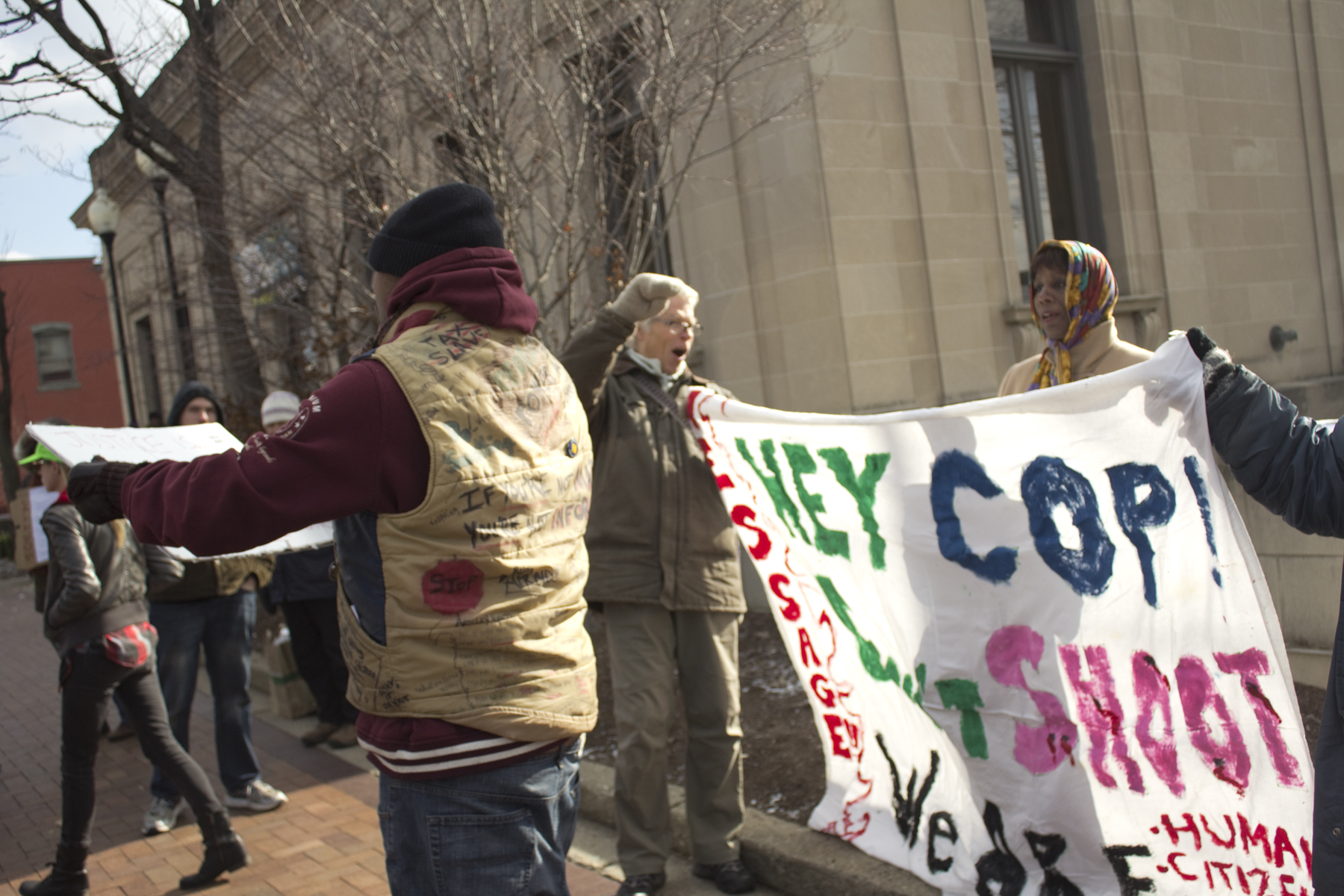
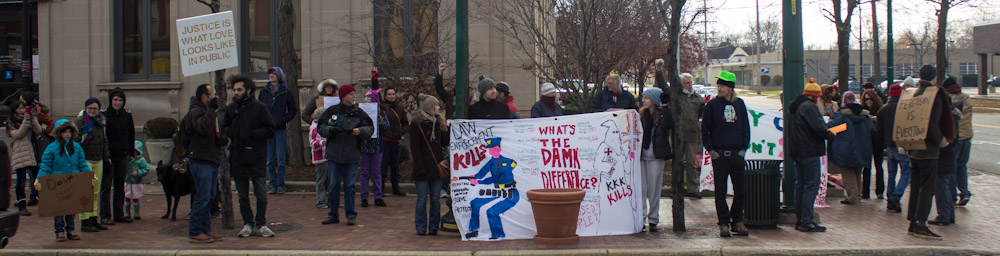
There is a powerful movement growing in this country against police violence and in particular against lethal police violence so disproportionately perpetrated on African Americans. This movement has come to Ann Arbor, where an estimated 1000 people took over the streets the night after prosecutor McCulloch announced that Ferguson Police Officer Wilson would not be indicted. Councilman Warpehoski sent me an email encouraging my participation in that action.
Lethal police violence perpetrated on African Americans also has come to Ann Arbor. On the night of November 9 an Ann Arbor cop shot to death Aura Rosser. Her killing was a central issue to those in the streets 6 nights ago, and also to people all over this country.
Now, 22 days after its awful occurrence, the continuing secrecy surrounding this homicide is an affront to the people and to principles of democracy and justice.
Ferguson identified the cop that killed Michael Brown 6 days later. New York identified the cop that killed Akai Gurley within hours, as did Cleveland in the killings of Tamir Rice and Tanisha Anderson. But 22 days after an Ann Arbor cop killed Aura Rosser, the police are keeping his identity secret.
The standard excuse for concealing the identities of cops that kill citizens is for the safety of the cops. Michigan’s Freedom of Information law allows that, but only when “supported by substantial justification and explanation, not merely by conclusory assertions.”
What substantial justification and explanation exist to maintain the secrecy of the officers involved in the killing of Aura Rosser? Is this what Chief Seto means when he touts the importance of community trust of the police?
Are we to take from this secrecy that the killing of Rosser is an even more egregious police homicide than those of Brown, Rice and Anderson? So egregious that the Ann Arbor cop is in imminent danger once his identity is known? Are we to conclude that the AAPD, the city of Ann Arbor and the Michigan State Police consider that this alleged imminent danger outweighs the public interest in the conduct of those whom we citizens pay to serve and protect the people?
STOP THE SECRECY
JUSTICE FOR AURA ROSSER
HANDS UP DON’T SHOOT
Why We Won’t Wait
Robin D.G. Kelley
Wait. Patience. Stay Calm. “This is a country that allows everybody to express their views,” said the first Black president, “allows them to peacefully assemble, to protest actions that they think are unjust.” Don’t disrupt, express. Justice will be served. We respect the rule of law. This is America.
We’ve all been waiting for the grand jury’s decision, not because most of us expected an indictment. District Attorney Robert P. McCulloch’s convoluted statement explaining—or rather, defending—how the grand jury came to its decision resembled a victory speech. For a grand jury to find no probable cause even on the lesser charge of involuntary manslaughter is a stunning achievement in a police shooting of an unarmed teenager with his hands raised, several yards away. Distilling 4,799 pages of grand jury proceedings to less than twenty minutes, he managed to question the integrity of eyewitnesses, accuse the 24-hour news cycle and social media for disrupting the investigation, and blame alleged neighborhood violence for why the removal of Mike Brown’s body from the pavement had to wait until morning. McCulloch never indicted a cop in his life, so why expect anything different now?
Beauty and Police
Peter Linebaugh
Aura Rosser, a forty-something Black mother of three, was shot to death by police here in Ann Arbor, on November 9, 2014.
What kind of human being was she? At the moment the answer depends on what the police suggest (drug addict) and what her sister is reported to have said (an artist). I do not wish to make biographical or psychological reflections about her but her death raises two other questions which deserve reflection: What kind of human beings are we? What are we to become?
The police, called to intervene in a domestic dispute, responded by shooting her in the face as she approached them from the kitchen, allegedly with a fish knife in her hand. According to her sister she would cook when she was upset. In fact she had a background in the food business having worked in restaurants in Detroit, Lansing, and Okemos. According to her sister she was “very artistic. She was deeply into painting with oils and acrylics. She’s a culture-type of gal,” her sister continued, “she was a really sweet girl. Wild. Outgoing. Articulate.”
 Radical Washtenaw