Letter to Chief Neumann

Dear Chief Robert Neumann,

I had the good fortune of being seated next to you at the workshop Derrick Jackson convened on April 25, to bring Washtenaw County cops into dialogue—though in hindsight, proximity is probably a more apt word—with civilians. I appreciated that unlike most of the law enforcement participants, who came in uniform and with weapons, you were in street clothes; you also were a generous rather than aggressive interlocutor.

Continue reading

Open Letter to the Ann Arbor Human Rights Commission

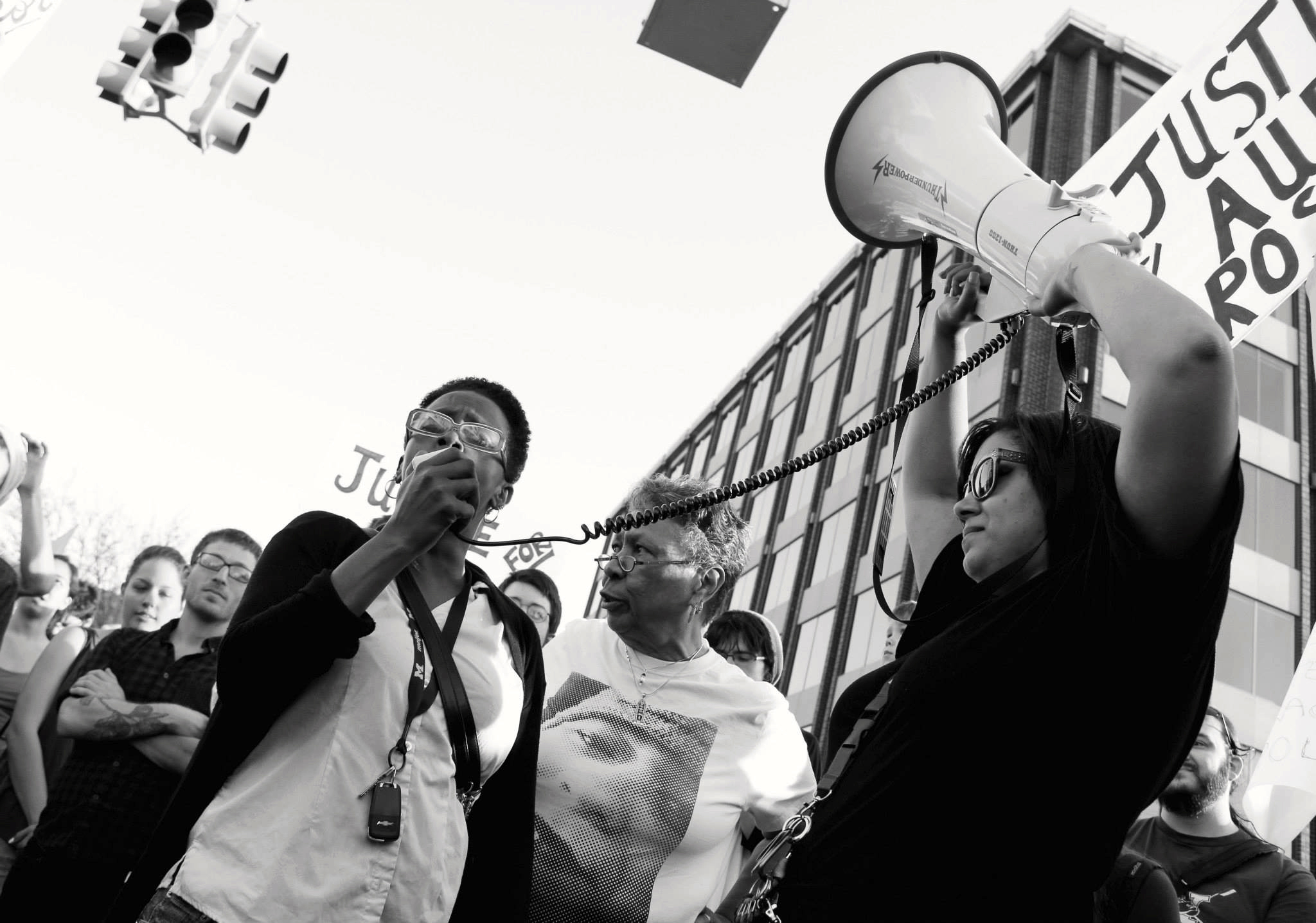
On Nov. 10, 2014 Aura Rosser, a local African American artist and mother of three, was shot and killed by AAPD. Her death, and the nation-wide pattern of state violence directed at Black Americans, continues to push our group, Ann Arbor to Ferguson, to act and plan for a better future. We had the impression that you, too, were shaken into action by Aura’s death.

Continue reading

Wake Up the Earth!

Peter Linebaugh

Two days ago (17 April) it was more than 70 degrees Fahrenheit. The daffodills were in full bloom. As usual on Wednesdays at the courthouse, we were protesting the police shooting of Aura Rosser last November, and the prosecutor who refused to indict the policeman for that crime. Suddenly, such a racket of birdsong poured out from the tree above us, as a robin redbreast sang his heart out and circled hysterically around a female! Spring had arrived at last. It has come so suddenly after an aching long winter.

Continue reading

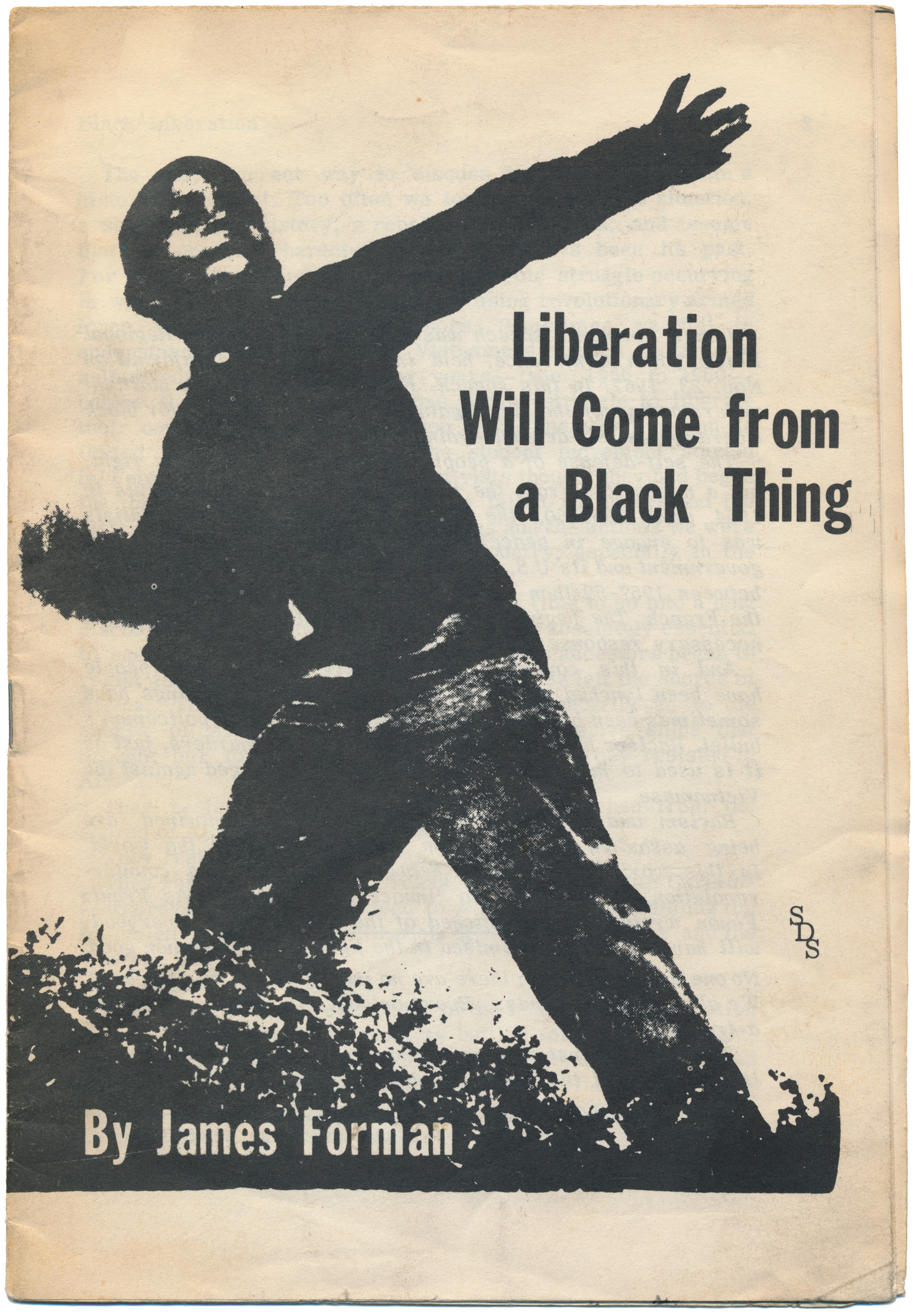
Liberation Will Come from a Black Thing

James Forman

liberation

Preface

James Forman’s speech was given at the Western Regional Black Youth Conference, held in Los Angeles, California on Nov. 23, 1967. In this speech, Forman pushes for a political understanding of the fight against racism, of the fight for black liberation as self-defense against U.S. imperialism.

The self-defense of a people against attack is not a right, but a necessity. From the time of the Geneva Agreements in 1954 until 1959–60, the policy of Vietnamese nationalists was to engage in peaceful legal struggle against the Diem government and its U.S. advisors. More Vietnamese were killed between 1957–59 than during the nine years of the war against the French. The beginning of armed resistance in 1959 was a necessary response to the violence of repression.

Continue reading

The Streets of Baltimore

Peter Linebaugh

Edgar Allan Poe died on the streets of Baltimore in 1849. Years earlier he was court martialled from West Point at a time when its graduates became officers in the U.S. Army, commanding poor white slobs to kill Indians or back up planters, landlords, and speculators as the Cotton Kingdom expanded and slaves became restless. Poe couldn’t hack it, so he drifted around before inventing detective fiction and police mysteries, the literary ancestors to the TV series The Wire, which is set in Baltimore.

He did not write directly about slavery but all his mystery, all the macabre and the gothic horror of his poetry and prose reflects the reality surrounding him: the terror and inhumanity of the labor camps, the rapes, the forced breeding, the forced separation of children from parents, and the inevitable destiny of forced labor. Baltimore was the capital of the domestic slave trade. Drugs and alcohol provided him with some relief. In 1842 Poe wrote “The Pit and the Pendulum.” Toni Morrison taught us how to read white American literature in her lecture “Playing in the Dark.” Poe’s story seems to be about the 13th-century Spanish Inquisition, but actually its terrifying atmosphere arises from the moral miasma of Baltimore.

Continue reading