Blink Your Eyes
Sekou Sundiata


Suddenly my city is crawling with plainclothes agents.
After being singled out by the Ypsilanti Police Department on June 18, 2015 at a demonstration and vigil for the Emmanuel 9, I was snatched and detained in their jail overnight. I was released the morning of June 19th with a ticket for impeding traffic.
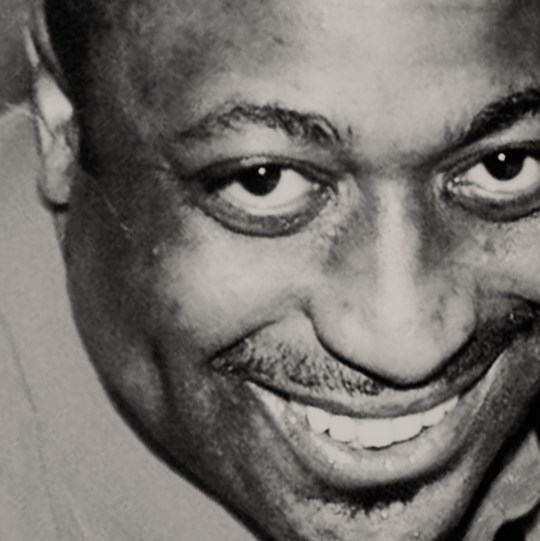
Interviewer Anthony Morgan asks African American as well as white residents of Ypsilanti, Michigan:
What is it like to be Black in America?
What is it like to be Black in Ypsilanti?
The responses to these questions provoke thought about two subjects not often discussed by white America: Black life and white privilege.
I guess what our job really boils down to is not letting the assholes take over the city. Now I’m not talking about your regular crooks … they’re bound to wind up in the joint anyway. What I’m talking about are those shitheads out to prove they can push everybody around. Those are the assholes we gotta deal with and take care of on patrol…. They’re the ones that make it tough on the decent people out there. You take the majority of what we do and it’s nothing more than asshole control. —A veteran patrolman
The asshole—creep, bigmouth, bastard, animal, mope, rough, jerkoff, clown, scumbag, wiseguy, phony, idiot, shithead, bum, fool, or any of a number of anatomical, oral, or incestuous terms—is part of every policeman’s world. Yet the grounds upon which such a figure stands have never been examined systematically. The purpose of this essay is to display the interactional origins and consequences of the label asshole as it is used by policemen, in particular, patrolmen, going about their everyday tasks. I will argue that assholes represent a distinct but familiar type of person to the police and represent, therefore, a part of their commonsense wisdom as to the kinds of people that populate their working environment. From this standpoint, assholes are analytic types with whom the police regularly deal. More importantly, however, I will also argue that the label arises from a set of situated conditions largely unrelated to the institutional mandate of the police (i.e., to protect life and property, arrest law violators, preserve the peace, etc.) but arises in response to some occupational and personal concerns shared by virtually all policemen.
No one but me can save me from my own white innocence.
Is the only possible future that through which I sleep?

 Radical Washtenaw