Flint
Darius Simpson
Darius spits inside the Genesee County Jail, where incarcerated people are drinking tapwater. Video by Shanna Merola.

Darius spits inside the Genesee County Jail, where incarcerated people are drinking tapwater. Video by Shanna Merola.
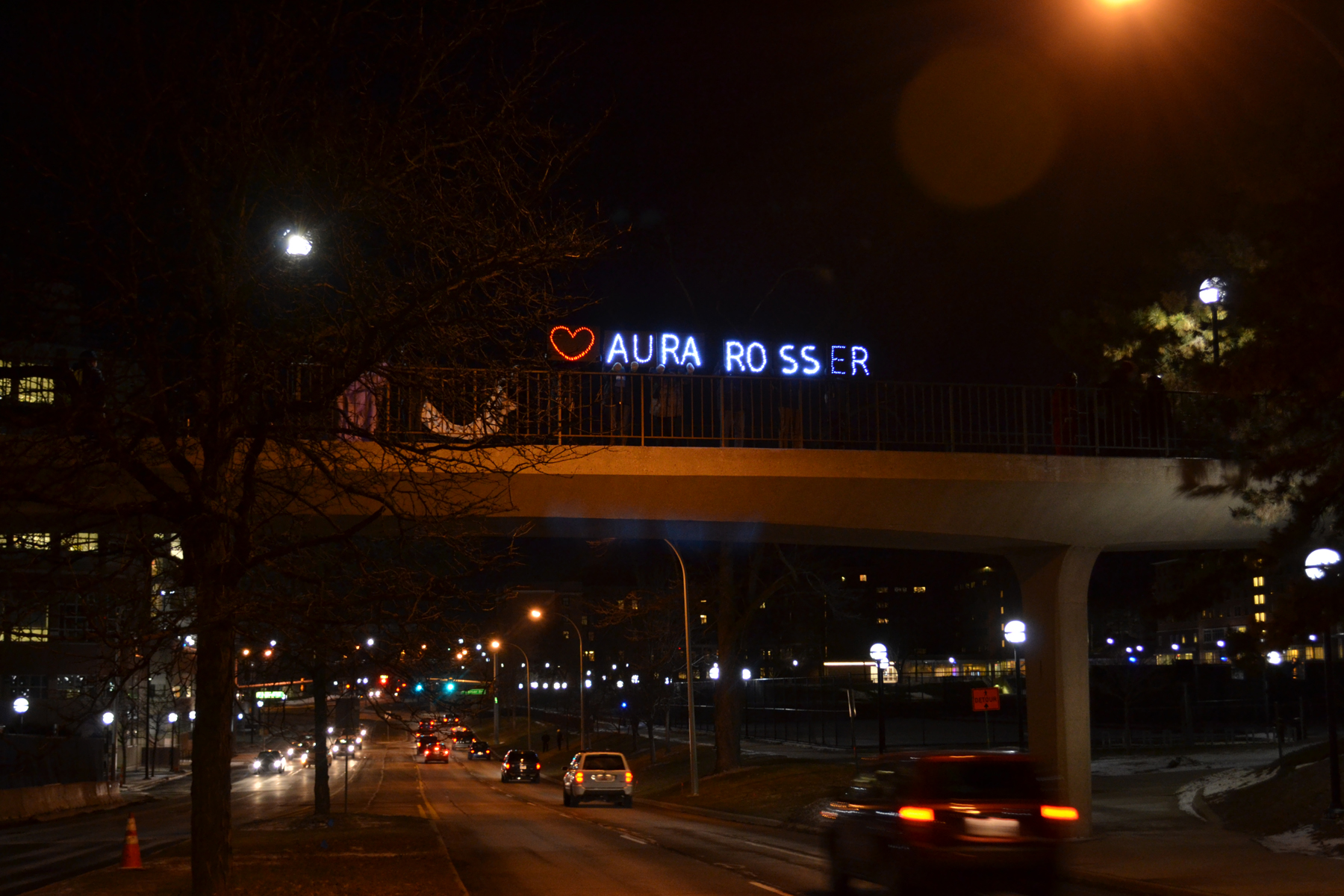
Editor’s note: Aura Rain Rosser would be 42 years old today. In honor of her birthday, we share with you a speech given by Maryam Aziz at the anniversary demonstration that took place in downtown Ann Arbor November 9, 2015. #DaysofAura
One year after, one year since. For one year, we have marched. We have marched all over this city, as is our right. We have been an unstoppable force in the landscape of Ann Arbor’s social and racial politics. We, you and I, have fought. We have stood on this plaza and fought to claim it for Aura Rosser, who, once we made the space, claimed it for herself. Don’t let them tell you that her memory doesn’t live on. We live on. She lives. Her Blackness has painted this pale city red with the colors of its own racist injustices. Her Blackness has shaded this city as the place of liberal hypocrisy that it is, masked by its own self-image of love and caring. They don’t care. The state doesn’t care. Our Mayor is colorblind and I mean that as the slur that it is. He cloaks his knives behind his words and defends abusive police action, claiming that mental illness and drug abuse caused Aura Rosser’s demise, not the cold steel that officer Ried cast when he took her life. Prosecutor Mackie is indignant, callous, and his pride over his biased investigative skills is more important than the truth, the truth that he absolved a system of the guilt of unremorsefully taking the life of a Black female citizens. Under former Chief Seto, the force saw no real changes. The approval in the city budget of purchasing body cameras is nothing but a shallow aid to justice when you not only refuse to make or name other changes, but also when you acknowledge that their use has a specific time and place. Now the University of Michigan has hired Seto, Officer Ried’s former boss, the man responsible for him, to head one of their departments of public safety. Where do you feel safe in Ann Arbor, Black family? The answer for me is nowhere.

.

In April 2014 Michigan Gov. Rick Snyder’s Flint Emergency Manager, in entrepreneurial consultation with the leading lights of Flint’s Karegnondi Water Authority, switched the city’s water source from the Detroit Water and Sewerage System to the Flint River. Almost immediately People in Flint knew there was something wrong. The water was brown or yellow, it stunk and it was full of floaters. For People forced to live under these outrageous circumstances, this was the first stage of understanding the systemic evils that underlie Snyder’s administration.
Black men and women in Ypsilanti accounted for 63% (1,179 of 1,869)[1] of all Washtenaw County arrests in 2014 on “failure to appear” bench warrants, even though they make up less than 2% of the county’s total population.[2] Black men in Ypsilanti alone accounted for over 51% of all arrests on “failure to appear” bench warrants in the county (Table 1 and 2).
Bench warrants are warrants for arrest issued by a judge (i.e., from the bench), usually for “failure to appear.” In Washtenaw County, these typically result from a failure to appear at a misdemeanor or felony hearing. In some circumstances, repeated failure to timely pay a fine can also result in a “failure to appear” bench warrant. Aside from “failure to appear,” a bench warrant might also be issued for offenses like perjury or contempt of court, but these are so rare that in the remainder of this report, the shorter term “bench warrant” will be used to refer specifically to “failure to appear” bench warrants.
The issuance of a bench warrant is at the discretion of the judge, who may accept an excuse for absence from a representing attorney or may reset the hearing date if a possible change of address could have resulted in a failure to receive notice.[3] Failure to appear is charged as a misdemeanor “Obstruction of Justice” that in Michigan can carry penalties of up to a year in jail and up to $1,000 in fines, as well as forfeiture of any bond paid.[4] More details are needed from the county courts to understand policies and practices around issuing bench warrants.
RAW had the good fortune of meeting with a collective of young women activists in Ann Arbor. We came away inspired, and enlightened. Dea will change the world.
When Ypsilanti City Council member Anne Brown “answered” a Public Comment speaker at the January 5 Council meeting, she chidingly spoke about Freedom Tuesdayz activists “march[ing] around,” “beating the drum,” and “honking horns.” Even though in her extemporaneous comments she tried to show solidarity with pro-Black organizing, that part of her statement belied, perhaps, what she really thinks: that the work of grassroots activists is worth mocking, and maybe that unless they sit in a seat of authority like she does, they’re wasting their time, or going about things the wrong way.
Regarding Ms. Brown’s reference to honking horns: first off, activists aren’t doing the honking; motorists who pass by the biweekly demonstrations are doing the honking, smiling, and fist-raising—in great numbers. Secondly, now that we know Ms. Brown is hearing the honks, one would hope that she feels a sense of urgency. The sheer number of drivers bearing down on their horns makes it crystal clear that Ypsi has a problem with racism and racist policing; Ms. Brown herself seemed to suggest this.
Certain vocal, adamant protesters have done a lot more to raise awareness about Black Life in Ypsilanti than its City Council has. May that not always be the case.
 Radical Washtenaw